



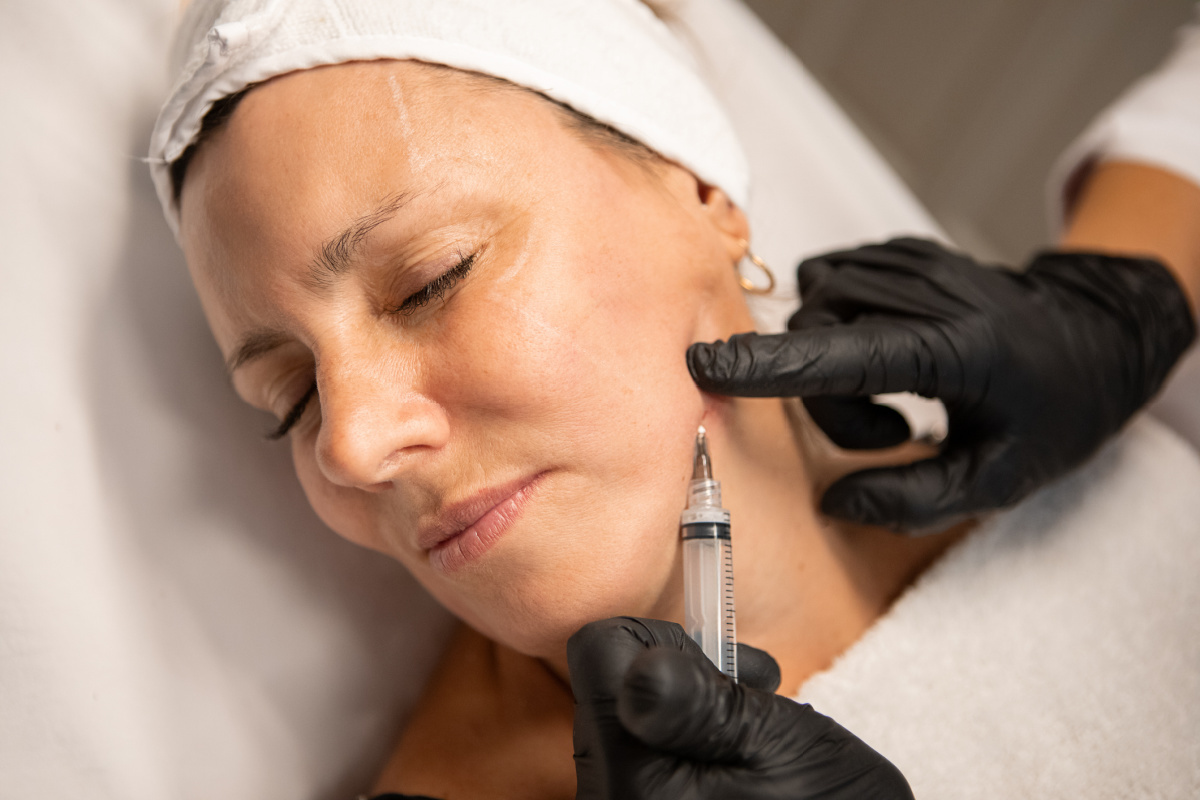
Somewhere between the rise of “preventative filler” content on social media and the before-and-afters that tend to feature younger faces, a misconception has taken hold: that facial filler is primarily a twenty-something treatment. Patients in their 40s, 50s, and beyond sometimes wonder if they missed the window, or whether filler can even do much for them at this stage.
The short answer is that age alone has very little to do with whether filler is right for you. What matters far more is your anatomy, the specific concerns you want to address, and whether filler is the most effective tool for the job.
At Maningas Wellness + Injectables, our Aesthetic Nurse Injector Katlyn Brooks, RN evaluates every patient as an individual, and the right candidates for filler injections span a much wider age range than most people expect.
What filler actually does (and why that matters at every age)
Dermal fillers are injectable treatments that restore volume beneath the skin, refine facial contours, and address the structural changes that come with aging. Most of the fillers we use at Maningas Cosmetic Surgery are hyaluronic acid-based, such as Restylane® and Juvéderm®. Hyaluronic acid, or HA, is a substance found naturally in the body that attracts and retains water, keeping your skin plump and supported.
As we age, our bodies produce less HA and collagen. This process begins earlier than most people realize. Collagen production starts to slow in the mid-20s, and the cumulative effect over decades is the gradual hollowing, flattening, and softening of facial features that we associate with looking older. Filler addresses that process directly, replenishing what the body has stopped making on its own.
That biology applies across age groups; the goals simply shift depending on where a patient is in that process.
Filler in your 20s and 30s: enhancement and early prevention
For younger patients, filler is most often about subtle enhancement rather than correction. Lip volume, cheek definition, and chin proportion are common goals, as these are areas where a small amount of product creates a noticeable improvement in facial balance without addressing aging at all.
There is also a prevention angle worth mentioning: because volume loss is a gradual process, maintaining some degree of facial support with small, strategic filler placements over time can slow the visible progression of aging. Patients who start conservatively in their late 20s or 30s often need less product over time than those who wait until significant changes have occurred.
That being said, we believe fillers in this age group should always be approached with care. Younger faces generally need very little product, and less is almost always more. Over-filling a face that hasn’t yet experienced meaningful volume loss is one of the most common ways to create unnatural outcomes with filler.
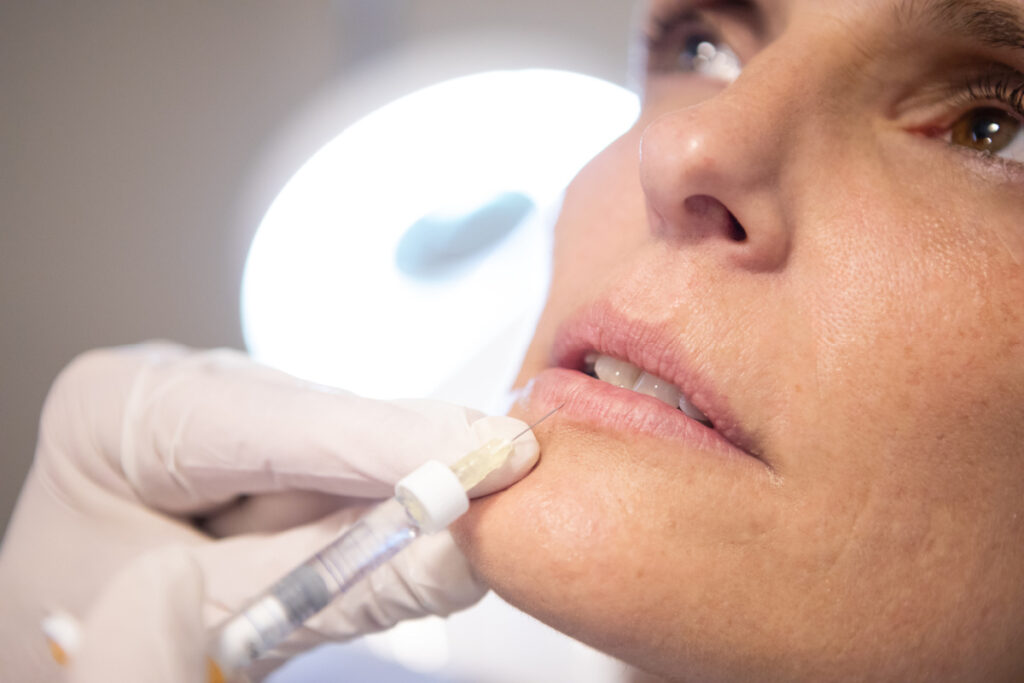
Filler in your 40s and 50s: restoring what’s been lost
This is when filler tends to have the most meaningful, visible impact for most patients. By the 40s, the fat pads in the face have begun to shift and thin, the mid-face can look flatter or more hollowed, and the skin may have lost some of the support structure that kept it lifted.
Used in the right areas, such as the cheeks, temples, nasolabial folds, under-eye area, and the lips, filler at this stage produces results that feel genuinely transformative. Volume placed precisely in the mid-face, for example, can lift and soften the entire lower face without touching it directly. Results can last one to two years depending on the product and placement.
For us, the goal at this stage is restoration: bringing your face back toward its earlier proportions rather than trying to change them. Katlyn approaches every treatment plan with that philosophy in mind. A subtle, well-placed result that looks like you on a good day is the aim.
Filler in your 60s and beyond: what it can and can’t do
Filler remains a viable option for many patients in their 60s and beyond, but candidacy becomes more anatomy-dependent at this stage. Patients with mild to moderate volume loss who have maintained relatively good skin quality tend to see excellent results. A patient in their 60s who has protected their skin and maintained a consistent skincare routine may actually be a stronger candidate than a patient a decade younger who has not.
Where filler has limits is in the presence of significant skin laxity. When the skin has become thin or crepe-like, or when sagging is the primary concern, filler alone cannot address the underlying structural issue and may even create an uneven appearance. In those cases, Katlyn is always honest about what filler can realistically achieve, and will discuss whether other treatments, like Morpheus8 microneedling, FaceTite or Forma for skin tightening and collagen, or even a surgical approach like a facelift might serve you better.
The question that matters more than age
Rather than “Am I too old for filler?,” the more useful question is: What do I want to address, and is filler the right tool for it?
Volume loss in the cheeks and lips? Filler is often the most direct solution. Skin laxity or jowling? A different approach may serve you better. Lines from muscle movement? A neuromodulator like Botox or Dysport will better suit your needs. Many patients benefit most from a combination: filler to restore structure, neuromodulator to address dynamic movement, and regular skin treatments to improve surface quality.
The only way to know what makes sense for your face is a consultation with a qualified physician who takes the time to look at your anatomy, listen to your goals, and give you an honest picture of what’s possible.
Schedule a consultation with our team
Katlyn Brooks, RN offers personalized injectable consultations at Maningas Injectables + Wellness. Whether you’re in your 30s and curious about prevention, or in your 50s and ready to address changes you’ve noticed over time, she would love to talk through your options with you.
Give us a call at (417) 437-0303 or book online to get started.